
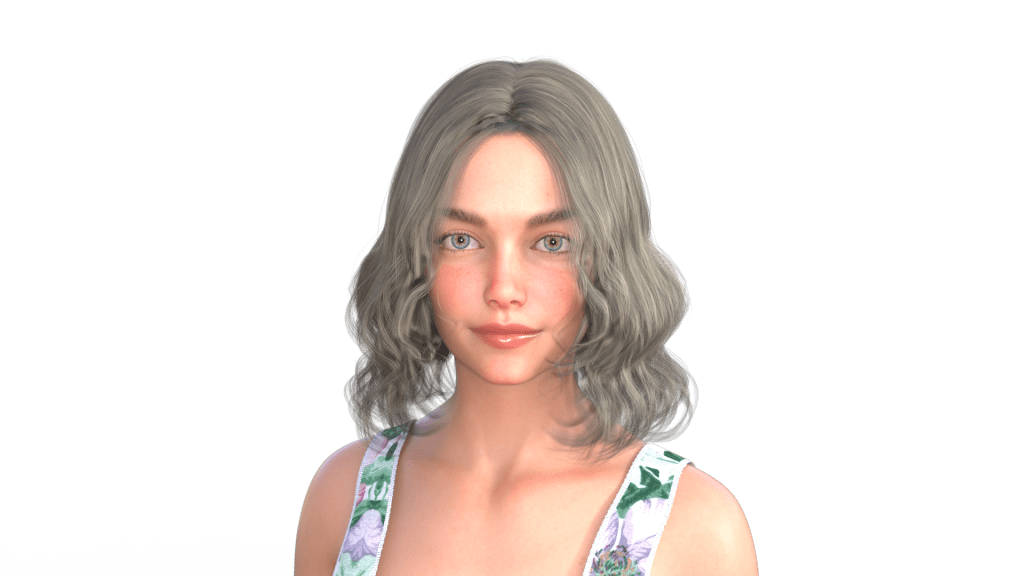
When I make my novel covers, the people I use aren’t real. They’re digital creations, my very own artwork. Most folks point at a computer and scold me, saying I don’t do anything, the computer does all the work.
Well, I’m going to show how it’s really done by my method, and you’ll see it’s not all that simple. It takes skills most people don’t have, along with a powerful imagination.
Okay, step one! I open DAZ 6 Pro, load a female figure as I am creating a female character named Gale, who is for a story I want to write. The screenshot of my DAZ (Digital Art Zone) 6 Pro looks like this, with a starting model that is basic.
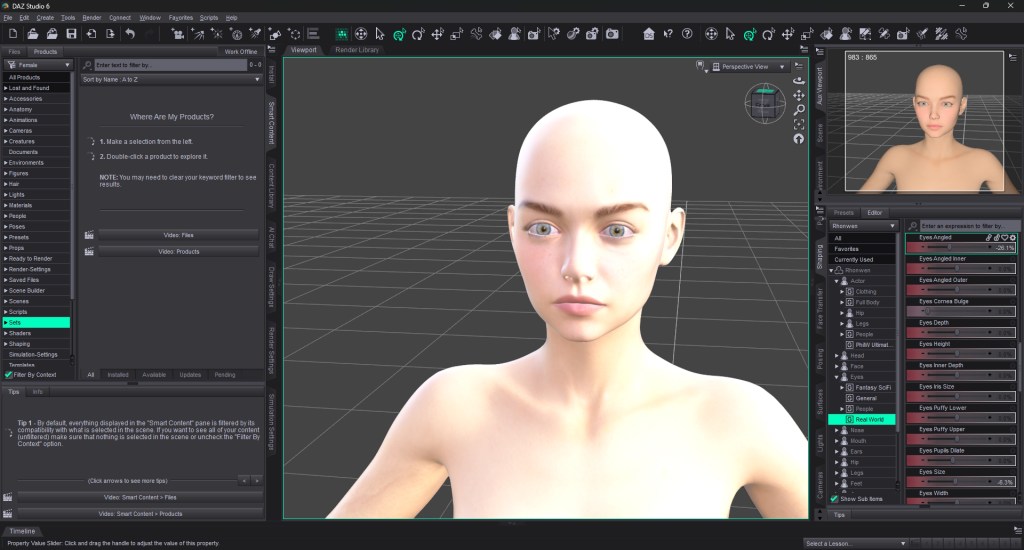
She has no hair yet, no shirt, but I adjust the shape of her eyes, head, I could even change her skin color, eye color, I could even make her an elf. But nope, today I need an average human girl, kind of pretty.
Next step is to give her hair and a top to wear, and get her to look at the camera, like she is looking at you. I’ll have her smile too!
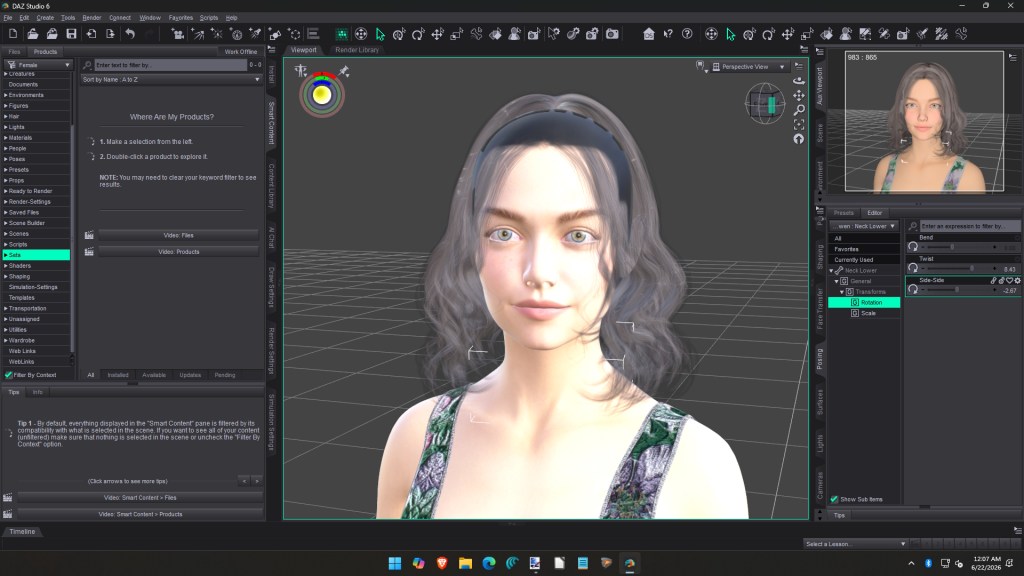
Much better, right? NOPE! This is still the development stage where I am designing her for further manipulation. Okay, with these settings made, I need to ‘Render’ her image to a much higher quality. The computer will chug for about 10 minutes for the bigger image. Here it is, as this completes this step with DAZ 6 Pro.
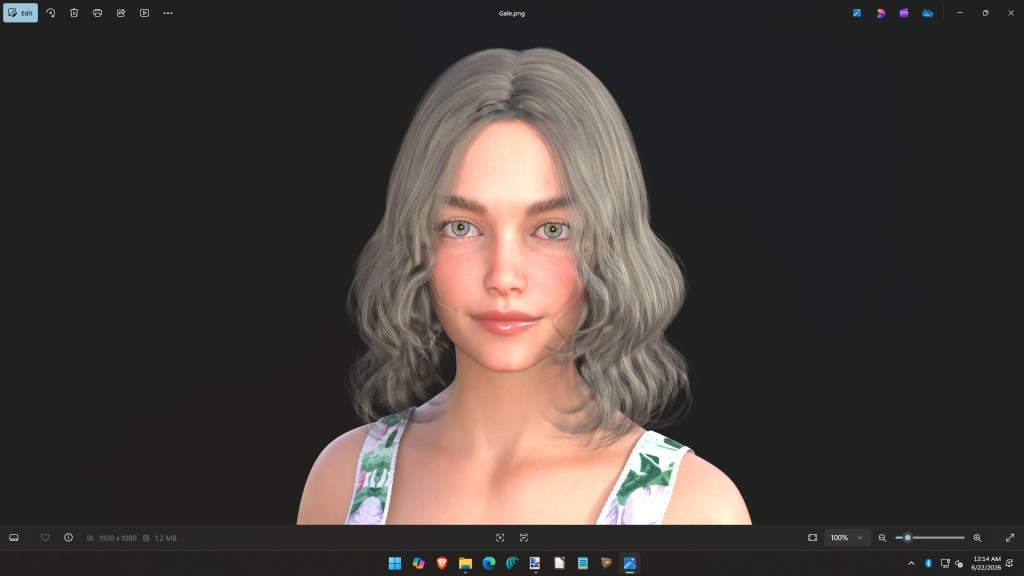
Now she’s looking a bit more real and a lot less cartoon. But you need to understand, this is only phase one. I need to go to phase 2, which is an online AI program called Night Cafe.
Now with Night Cafe, I can generate ladies from scratch, no need to use DAZ, but that doesn’t give me exactly what I want all the time. It’s not really mine if I don’t actually create her base design. So I upload her custom made base design, and I tell Night Cafe what I want done, and to make her into a realistic photo. Here is that screenshot!
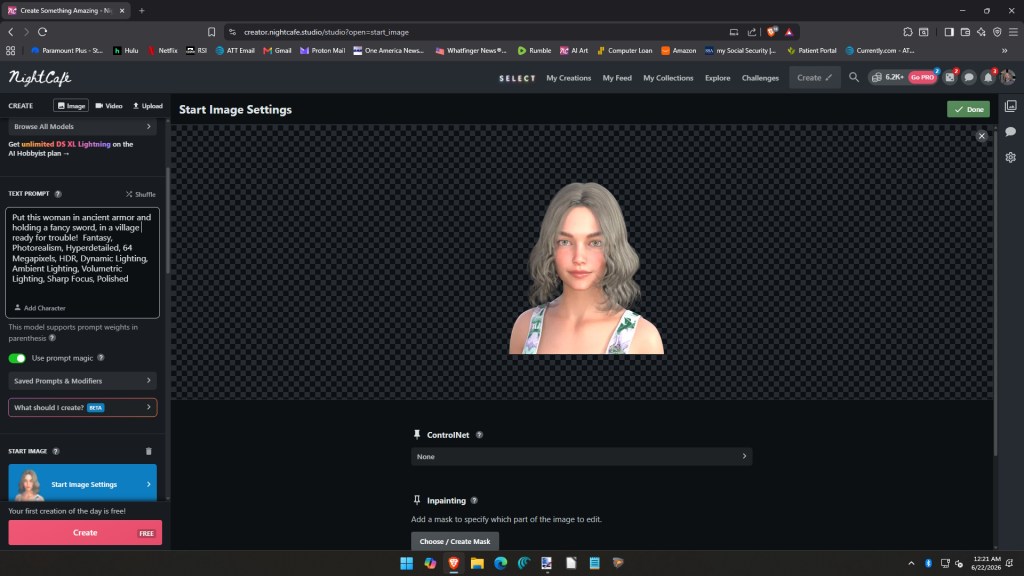
As you can see, her original likeness, created by me, is uploaded with further instructions in the dialog box. I don’t always get exactly the screen I want, but I did specify armor and I used the lingo to make her photo real. And the results look like this:
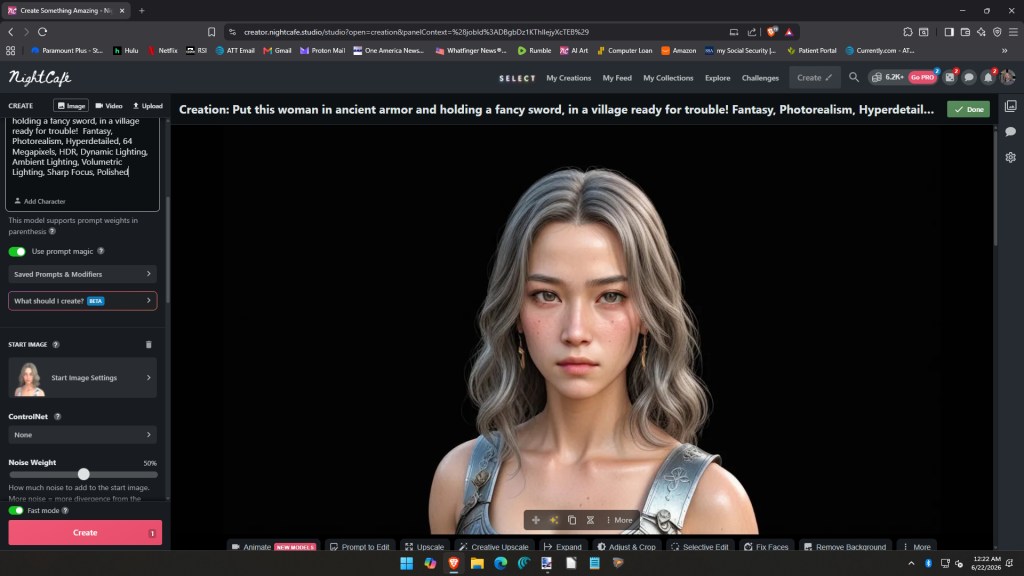
Aha! Now she is starting to look good and real! But she is not in the kind of scene I want. I need her in a village. So I specify that. And this is what I get.
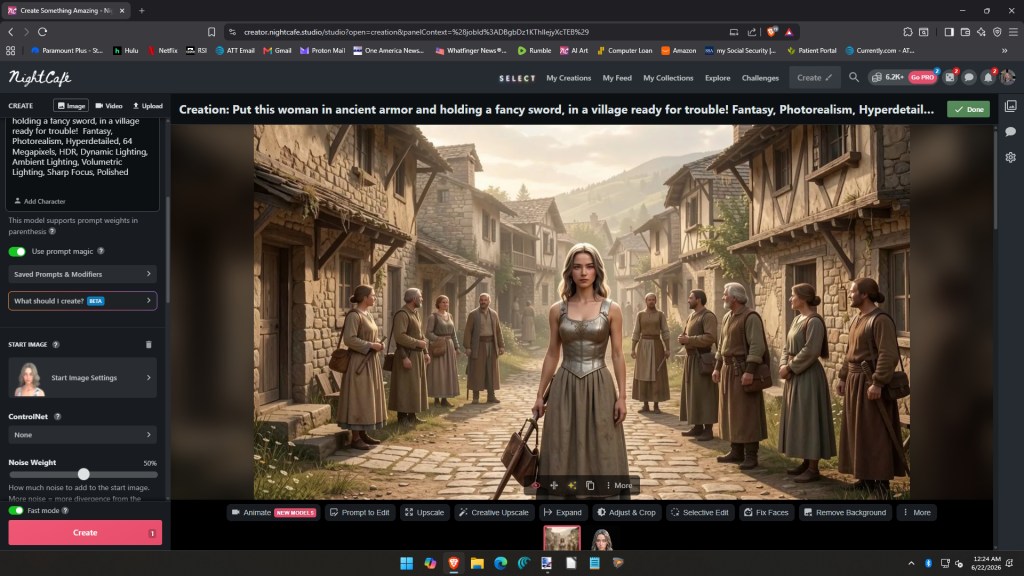
Of course, the AI messes up a little bit. This is the tell tale thing that informs everyone that AI was in on this image! But I need to refine the situation. So I tell the system to remove the purse and sword, and to remove the people. I just want her in the village alone. And viola!
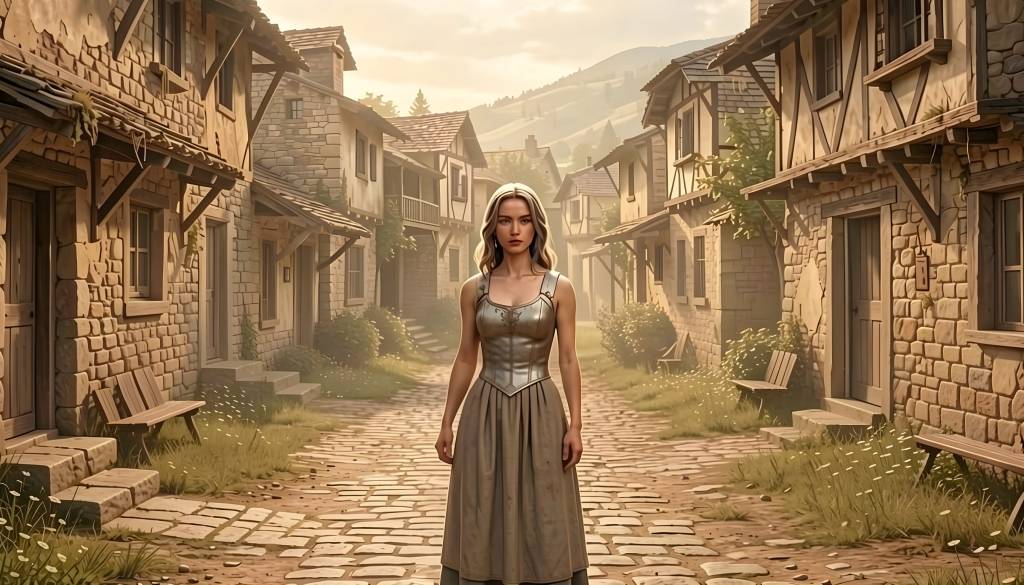
Now I have something I can work with to make my book cover! And the final step gives me this, using my Paint and Photoshop program.
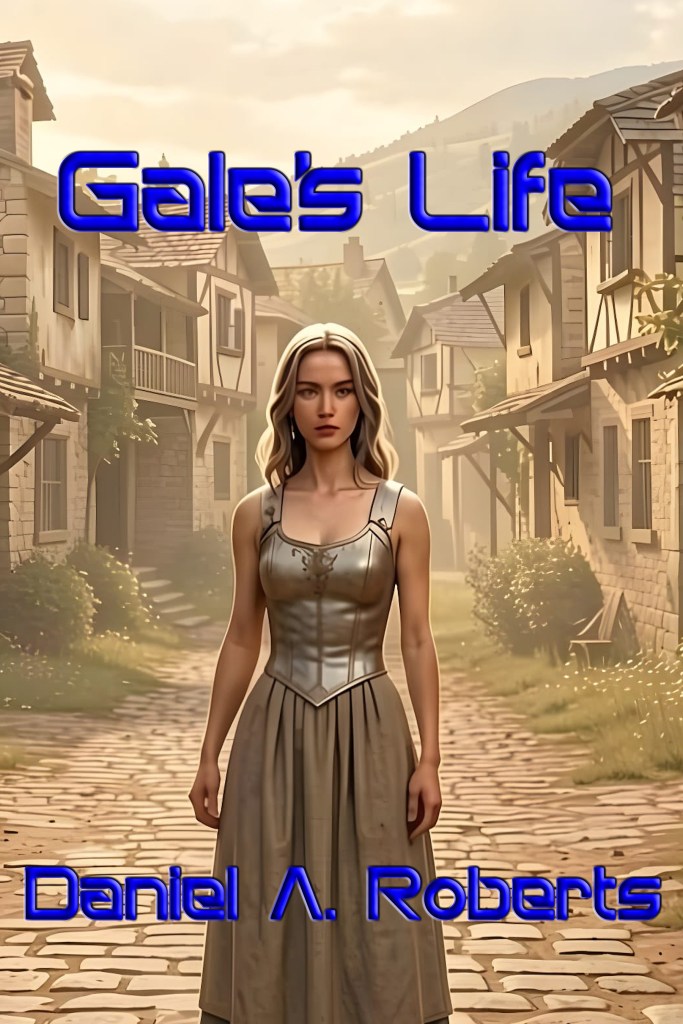
Understand, this is just for example only. There is no book coming out labeled Gale’s Life or anything like that, and this terribly generic style of a cover just shows the steps I take to make my own creations.
So I use digital manipulations to get what I want. Why is this better than photo stock based book covers? Because the SAME photo can be used by multiple authors and companies and it can spawn some serious imaging problems. So what do those tend to look like? Here’s an excellent example!
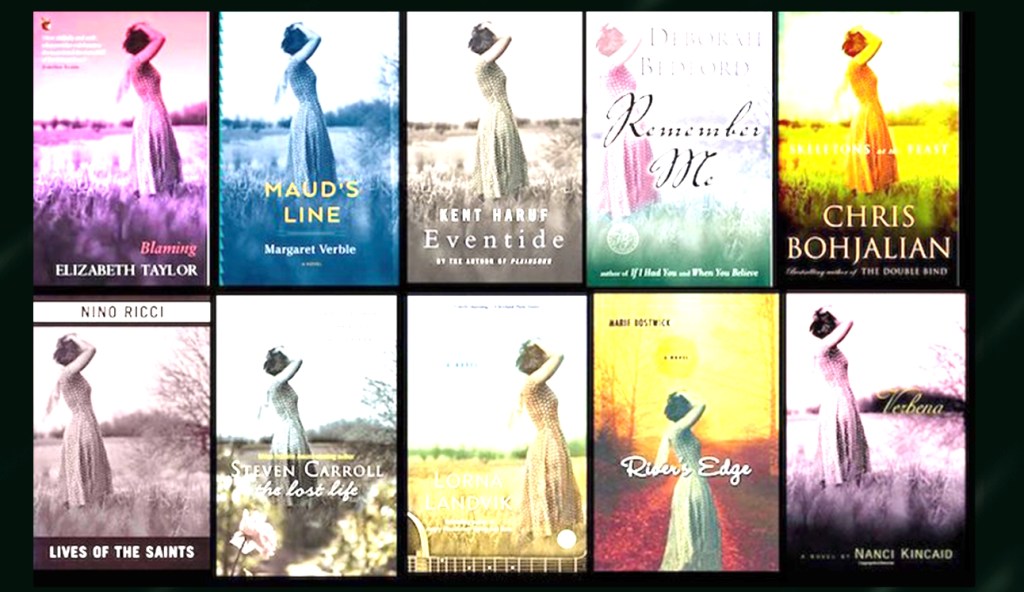
As you can see, the SAME photo stock ended up on different novels for different authors and it looks bad! And this happens to more than just one image. Here’s another example!
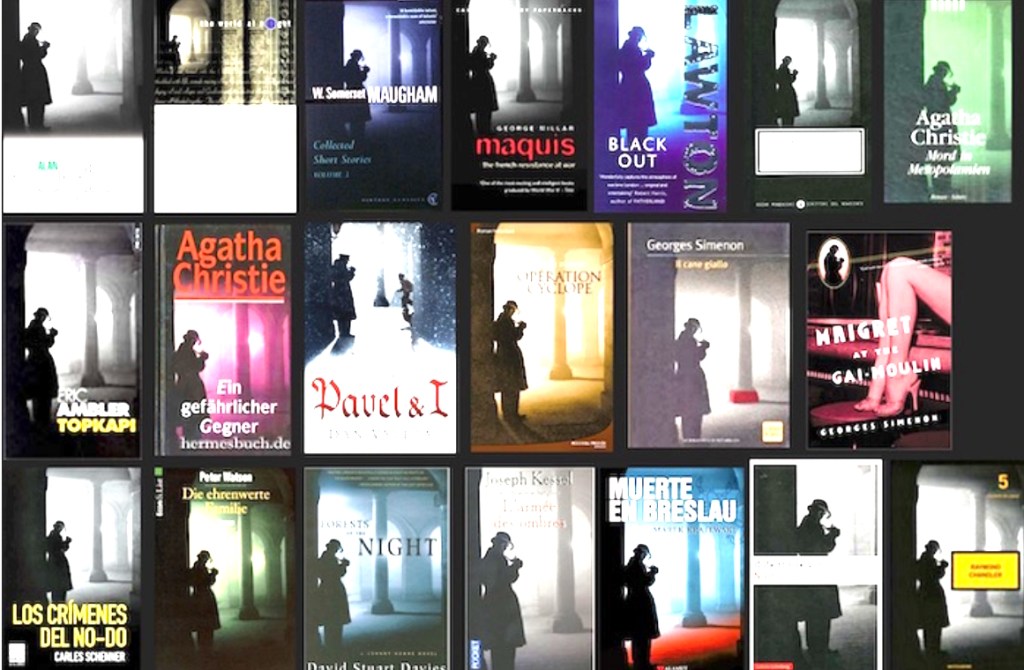
This is why I make my own images! I make my own characters. I generate my OWN book covers. This will never, ever happen to any of my books! I will never have any of my creations accidentally used on other novels not written and published by me.
Which brings this long post to a close. Now you know. I avoid photo stock to make my own book covers because this happens all too often. It’s really my own artwork, made from scratch.
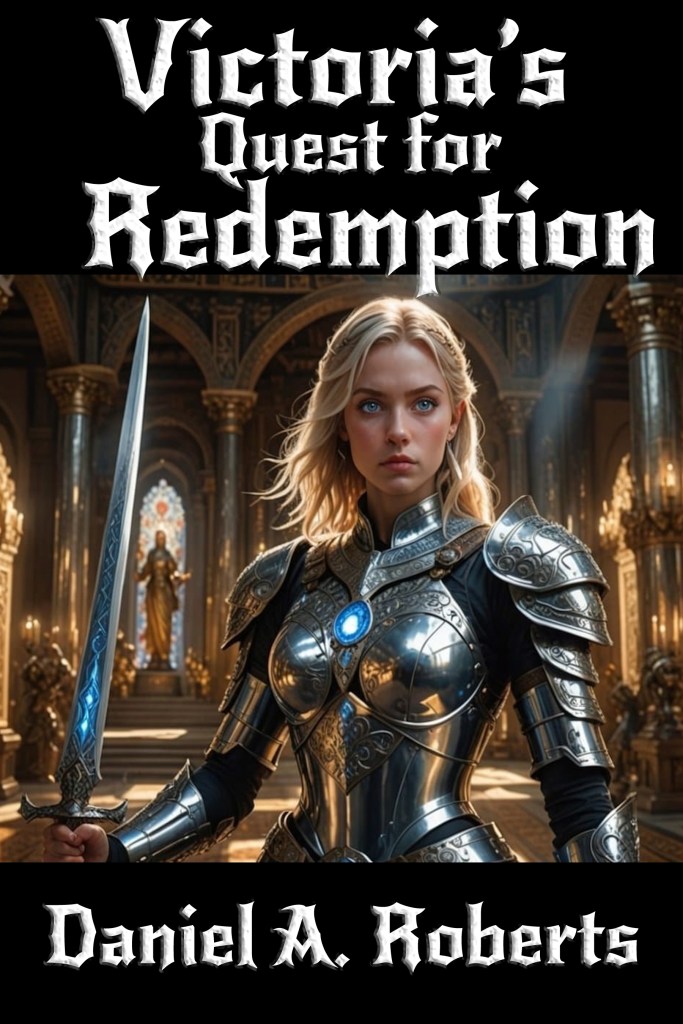
Don’t think this is all done in just a few hours. A good quality cover can take weeks, sometimes months, to fully get right. Here is a cover for a real novel that Daniel A. Roberts will be publishing within the next couple of weeks. Take a good look at the quality, the realism, and the overall impact. As you will notice, it’s 100% worth it, and I will never have to fear a repeatable photo stock image ending up on my own novel cover.


Leave a Reply